
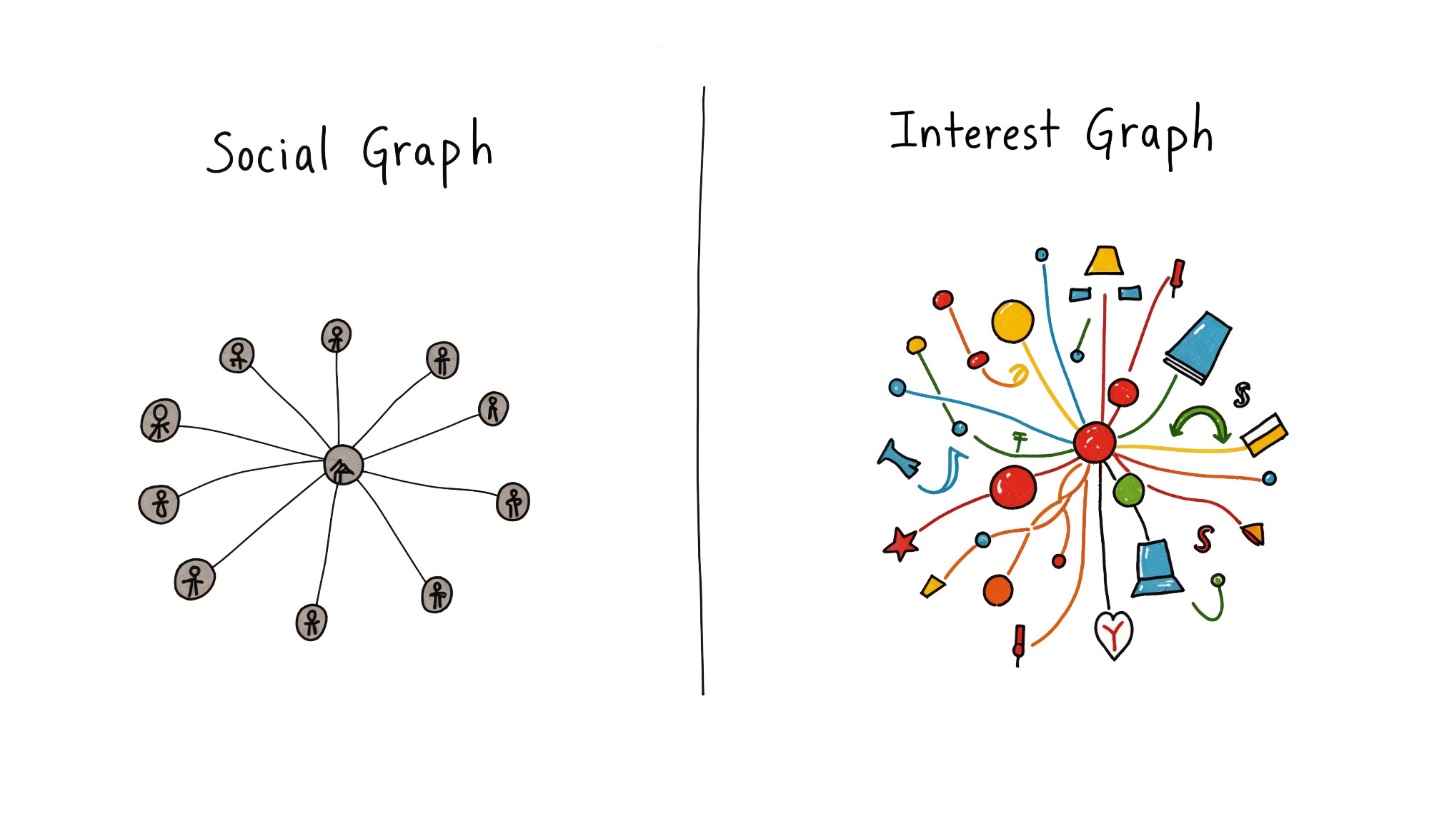
Defining speculative social graphs
A speculative social graph is a network model that maps potential connections rather than established ones. Unlike traditional social networks built on confirmed friendships or professional history, this architecture relies on financial incentives and probabilistic outcomes to drive engagement.
In this model, the value of a connection is not derived from mutual trust or past interaction, but from the speculative potential of future utility. Users are incentivized to expand their network breadth, treating every potential link as an asset with uncertain but theoretically high return. This shifts the fundamental unit of the social graph from "relationship" to "opportunity."
This distinction marks a significant departure from the relational models pioneered by early social platforms. Where traditional graphs prioritize the strength of existing ties, speculative graphs prioritize the density of potential pathways. The resulting network is less a community of known peers and more a marketplace of accessible nodes, where trust is secondary to accessibility and incentive alignment.
Tokenized community governance assets
Social tokens function as the economic layer that validates and incentivizes participation within speculative social graphs. Unlike traditional equity, which represents ownership in a centralized entity, these tokens represent a claim on future value generated by a creator or community. They transform social capital—engagement, influence, and trust—into a transferable, programmable asset.
Defining the mechanism
A social token is a cryptocurrency issued by an individual, brand, or collective. It serves as a membership pass and a voting tool, allowing holders to influence the direction of the project. This creates a feedback loop where participants are financially aligned with the success of the network they help build. The token’s value is speculative, derived from the perceived growth of the underlying social graph rather than traditional revenue streams.
Governance as a feature
Tokenized governance allows holders to vote on proposals, from content direction to community guidelines. This decentralizes authority, shifting power from a single administrator to the collective. For example, the $BIT token (BitDAO) demonstrates how large-scale community governance operates on-chain, though smaller creator-led tokens follow similar, scaled-down principles. This structure ensures that the community has a tangible stake in the platform’s evolution.
Market dynamics and volatility
The value of social tokens is highly volatile, reflecting the fluctuating reputation and engagement of the issuer. They are often traded on decentralized exchanges, where liquidity can be thin. Investors buy tokens not just for governance rights, but for the speculative belief that the creator’s influence will grow. This creates a unique market where attention is the primary driver of asset pricing.
Decentralized identity trust models
Decentralized identity models shift verification from centralized platforms to on-chain history and token-gated interactions. Instead of relying on a single provider to validate a user, these systems use cryptographic proofs to establish trust. This approach allows individuals to control their own data while proving specific attributes, such as age or residency, without revealing unnecessary personal information.
The core mechanism involves Verifiable Credentials (VCs) and Decentralized Identifiers (DIDs). A DID is a unique identifier stored on a blockchain, while a VC is a tamper-proof digital document issued by a trusted entity. When a user interacts with a dApp, they present a zero-knowledge proof derived from their VCs. This confirms their eligibility without exposing the underlying data to the platform.
Token-gating takes this a step further by linking access to ownership of specific digital assets. Holding a particular NFT or token serves as proof of membership or reputation. This creates a "trustless" environment where access is determined by code rather than manual approval. It reduces the risk of platform censorship and allows for portable reputation across different applications.
However, this model introduces new risks, particularly Sybil attacks. Since identities are pseudonymous, malicious actors can create multiple fake identities to manipulate voting systems or airdrops. Defending against these attacks requires sophisticated on-chain analysis and reputation scoring, which adds complexity to the user experience.
Decentralized identity systems must implement Sybil-resistant mechanisms, such as proof-of-humanity or reputation-based gating, to prevent fake accounts from undermining trust.
The shift toward decentralized identity represents a fundamental change in how we verify trust online. By moving away from centralized gatekeepers, users gain more control over their digital lives. However, this comes with the responsibility of managing cryptographic keys and understanding the nuances of on-chain verification.
Trading dynamics in speculative social graphs
Speculative social graph trading involves users betting on the future value of their network connections rather than existing interactions. Unlike traditional metrics that measure past engagement, this model maps potential influence. A speculative social graph is a network model that maps potential connections rather than existing ones, allowing users to speculate on the latent value of their social capital (Speculation Driven Social, n.d.).
The mechanics rely on distinguishing between established relationships and projected influence. Traditional platform metrics focus on unipartite graphs where nodes represent a single type of user, measuring actual likes, shares, or follows. In contrast, speculative metrics assess the probability that a connection will yield value. This shift transforms social influence into a tradable asset class, where the "price" reflects the predicted utility of a future interaction.
To understand the difference, it is necessary to compare the structural and functional attributes of traditional versus speculative graph metrics. Traditional models are backward-looking, while speculative models are forward-looking.
This distinction is critical for understanding the trust economy. As Mark Zuckerberg originally defined the social graph, it was a tool for connecting existing relationships across platforms. However, speculative trading requires a departure from this static view, treating the graph as a dynamic field of potential value rather than a fixed record of history.
Types of social graph structures
Social networks rely on specific node configurations to map relationships. In speculative asset environments, these structures determine how trust and value propagate. The primary distinctions lie in whether the network connects single, dual, or triple categories of entities.
Unipartite graphs
A unipartite graph contains only one type of node. In a social context, these nodes represent individual users. Edges connect users directly to other users, mapping simple friend or follower relationships. This structure is the most common model for early social platforms, where the focus is purely on peer-to-peer connections without intermediary asset classes.
Bipartite graphs
Bipartite graphs divide nodes into two distinct sets. Connections only occur between nodes in different sets, never within the same set. In speculative markets, this often maps users to assets (e.g., tokens or stocks). A user holds or trades an asset, creating a clear separation between the actor and the instrument, which simplifies the analysis of ownership concentration.
Tripartite graphs
Tripartite graphs introduce a third node category, partitioning the network into three separate sets. This structure is essential for complex speculative ecosystems involving users, assets, and governance mechanisms or platforms. By separating these layers, researchers can analyze how protocol rules influence user behavior and asset valuation independently, providing a more granular view of the trust economy.
No comments yet. Be the first to share your thoughts!