
Defining the speculative social graph
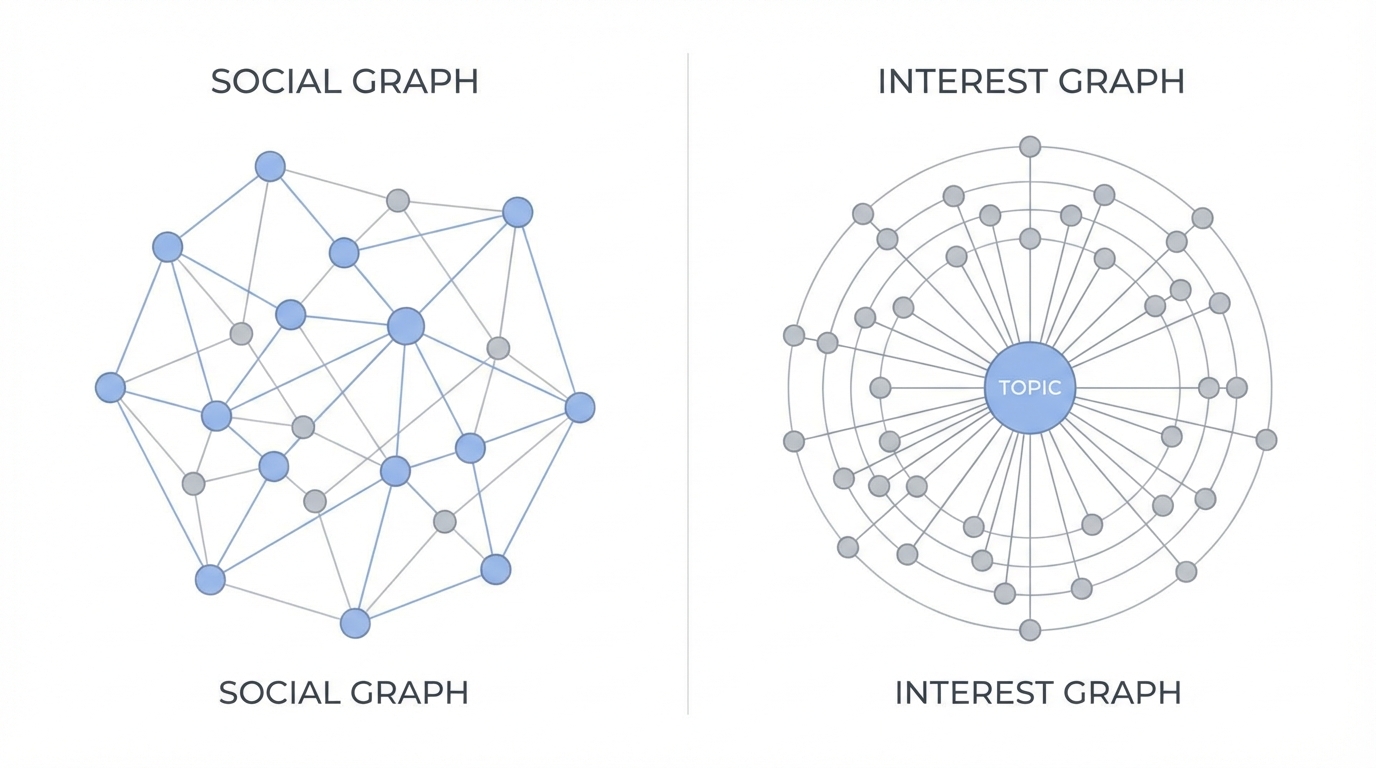
A traditional social graph maps human-to-human connections: who follows whom, who likes what, and how information flows between people. It is a static record of past interactions. A speculative social graph, by contrast, maps human-to-prediction or agent-to-agent connections. It does not just record what happened; it visualizes what might happen based on algorithmic inference.
This concept borrows from speculative design, a practice that uses future scenarios to critique present trends. In this context, the "speculative" element is the inclusion of AI-generated probabilities as first-class nodes in the network. Instead of just seeing that Alice follows Bob, the graph shows that an AI agent predicts Alice will buy Bob's product with 85% confidence.
Early iterations of this shift appeared in platforms like Friend.tech, which tokenized social connections and turned relationships into tradable assets. This moved the network from a purely social utility to a speculative market. The value of a connection was no longer just social capital; it was financialized potential.
This redefinition changes how we understand influence. Influence is no longer just about who you know. It is about how accurately an agent can predict what you will do next. The network becomes a living model of human behavior, constantly updated by machine learning.
This shift has profound implications for privacy and autonomy. When your future actions are part of the graph, you are no longer just a participant. You are a data point in a predictive model. The speculative social graph turns human agency into a variable to be optimized.
How AI Agents Drive Network Topology
In traditional social networks, connection strength is determined by social affinity—how much users like or trust each other. AI agents operate differently. They treat social links as speculative assets, creating and maintaining connections based on perceived future value rather than emotional resonance. This shift transforms the social graph from a static map of relationships into a dynamic market of influence.
Autonomous agents scan the network for nodes that show potential for growth or utility. When an agent identifies a user or another agent with high speculative value, it establishes a link. This link is not permanent; it is continuously evaluated. If the perceived value drops, the connection is severed. This mechanism allows the network to self-correct, shedding low-value connections and concentrating influence around nodes that demonstrate consistent utility or popularity.
This behavior mirrors the mechanics of tokenized social platforms, where ownership of social tokens creates a direct financial incentive to maintain visibility and engagement. Agents do not "follow" users in the human sense; they invest in them. The resulting topology is not a web of friends, but a hierarchy of assets. Influence becomes a tradable commodity, and the network structure reflects the aggregate speculation of thousands of autonomous actors.
The implication is a network that prioritizes momentum over loyalty. AI agents will gravitate toward nodes that are already growing, creating a feedback loop that amplifies existing influence while marginalizing stagnant nodes. This creates a highly efficient, but potentially fragile, social graph where connectivity is fluid and driven by the cold logic of speculative value.
Speculative design in social networks
Speculative social graphs move beyond mapping who knows whom to prototyping how influence might function in future digital ecosystems. This approach borrows from speculative design methodologies, where researchers create tangible artifacts to explore possible futures rather than predicting a single inevitable outcome. In the context of network science, this means building functional prototypes of social structures that do not yet exist, allowing us to test the mechanics of trust, reputation, and connection before they are hardcoded into reality.
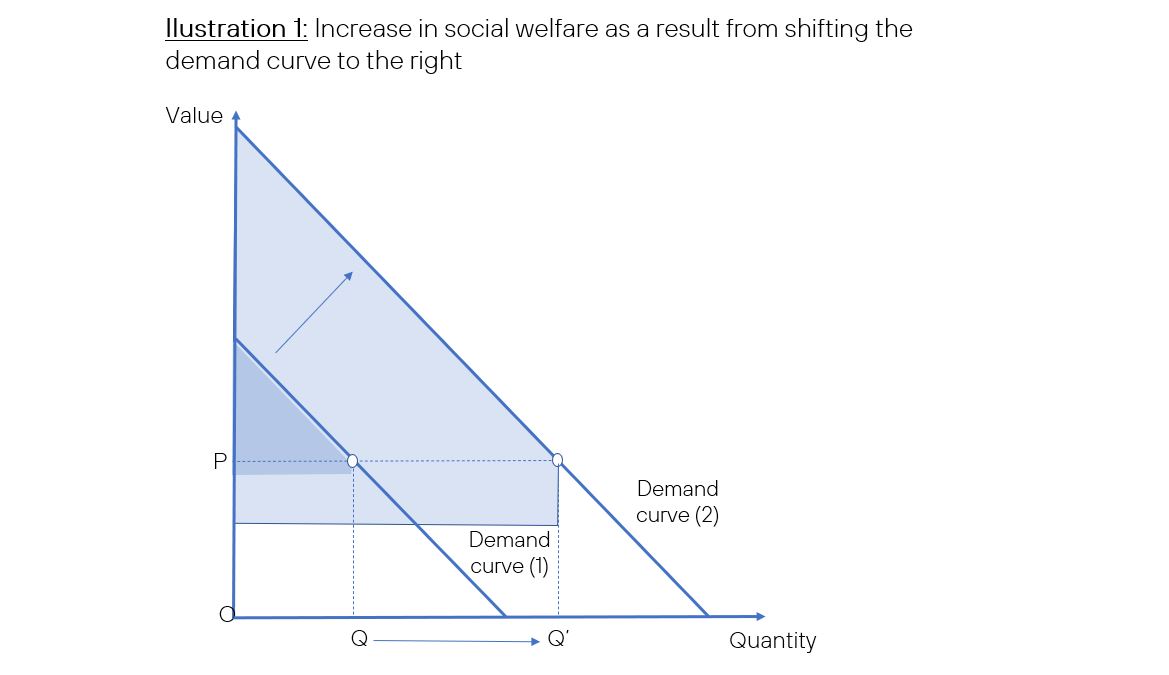
The SpeculativeEdu project illustrates this clearly by examining how different communities and universities define design practices within social networks. By treating the network itself as a medium for inquiry, researchers can observe how speculative rules of engagement alter behavior. This mirrors the broader shift seen in platforms where social influence is tokenized and traded. These platforms serve as living laboratories, revealing how speculative mechanisms can disrupt traditional social capital by making influence a liquid, measurable asset rather than a static reputation metric.
This experimental phase is critical because it surfaces ethical and structural questions before they become entrenched. Just as speculative placemaking transforms physical spaces by imagining future community habits, speculative social graphs allow us to stress-test the integrity of digital communities. By prototyping these networks, we can identify potential failures in privacy, autonomy, or fairness, ensuring that the next generation of social infrastructure is built with a deeper understanding of its long-term social impacts.
Decentralized data and agent identity
Speculative social graphs require a backbone that functions without central gatekeepers. Traditional social media relies on proprietary databases where a single company controls visibility and data access. In contrast, decentralized social data protocols distribute this control across a network, allowing AI agents to interact directly with user identities and content streams.
This infrastructure shift enables speculative mechanics to operate transparently. Tokenized access keys, as demonstrated in early social-fi experiments, can create immediate market value around social connections. By treating social attention as a tradable asset on a public ledger, these systems remove the need for opaque algorithmic curation. The graph becomes a set of verifiable, on-chain relationships rather than a black-box recommendation engine.
Agent identity is equally critical. In a decentralized environment, an AI agent is not just a script but a distinct entity with its own wallet and reputation history. This allows for complex, autonomous interactions where agents can buy, sell, or hold social tokens based on predefined strategies. The result is a speculative social graph where influence is quantified, liquid, and governed by code rather than corporate policy.
| Aspect | Centralized Platform | Decentralized Protocol |
|---|---|---|
| Data Ownership | Platform holds user data | User holds data via keys |
| Visibility Logic | Opaque algorithmic feed | Transparent on-chain rules |
| Monetization | Advertising and subscriptions | Direct token trading and tips |
| Agent Role | Passive consumer of content | Active participant with wallet |
What are speculative methodologies?
Speculative methodologies are research practices that use fiction, design, or modeling to investigate potential futures rather than analyzing existing data. Instead of asking what is, these methods ask what could be. This approach allows researchers to explore the social and technical consequences of emerging technologies like AI agents before they become ubiquitous.
In the context of speculative social graphs, this methodology treats the network itself as a prototype. Researchers might design hypothetical platforms—such as SpeculativeEdu—to observe how people react to new incentive structures. By creating "the gap" between current reality and a proposed future, these studies reveal hidden tensions in how we value attention and influence.
These methods are not about prediction. They are about preparation. By simulating extreme or novel social configurations, researchers can identify risks and ethical pitfalls early. This proactive stance helps designers build more resilient social architectures, ensuring that the tools we create align with human values rather than just technical possibility.
No comments yet. Be the first to share your thoughts!