
Defining the speculative social graph
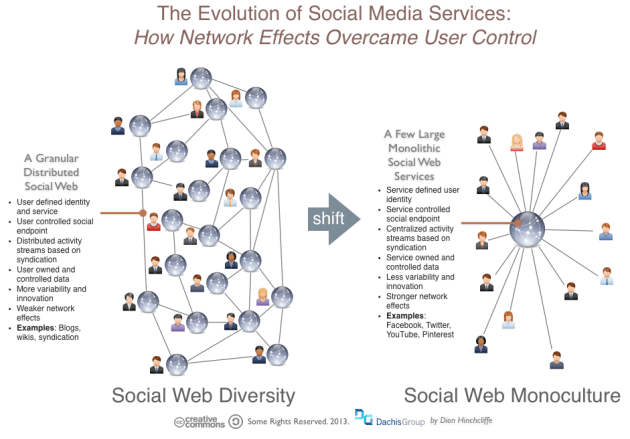
A speculative social graph restructures online interaction by replacing organic relationship building with financial incentivization. In traditional networks, connections are formed through shared interests, professional utility, or existing friendships. The speculative variant flips this dynamic: the bond is the asset. Users do not just follow or connect; they buy and sell tokens representing other users, effectively treating social influence as a tradable commodity.
This model shifts the primary bonding agent from mutual interest to financial speculation. When a user purchases a token representing another account, they are not merely signaling support; they are taking a market position on that individual's future relevance and engagement. This creates an "investment graph" where attention is quantified and traded, distinct from the organic, often passive, connections of legacy platforms.
Platforms like FriendTech pioneered this structure by allowing users to tokenize their social capital. On such networks, the ability to influence discourse or gain visibility is directly tied to the market performance of one's tokens. This mechanism aligns creator incentives with platform growth but introduces volatility as a core feature of social interaction rather than an external byproduct.
The implications for market dynamics are significant. As social ties become financial instruments, the value of a connection is subject to rapid repricing based on sentiment shifts, algorithmic changes, or broader crypto market trends. This creates a feedback loop where financial performance dictates social visibility, fundamentally altering how communities form and sustain themselves in the 2026 landscape.
Market mechanics and value drivers
The simplest way to evaluate these platforms is to write down the must-have criteria first, then compare each option against those criteria before weighing nice-to-have features. A practical choice should survive normal use, maintenance, timing, and budget. If a recommendation only works in an ideal situation, call that out plainly and give the reader a fallback path.
Comparing Graph Models and Platforms
The speculative social graph market in 2026 is no longer a monolith. It has fractured into distinct architectural approaches, each balancing liquidity, user experience, and regulatory exposure differently. Understanding these structural differences is essential for evaluating which platforms can sustain value beyond initial speculation.
The core tension lies between token-gated access models and open protocol layers. Early entrants like FriendTech pioneered the "investment graph," where financial speculation on social attention drove network effects. While this created immediate liquidity, it introduced significant regulatory risk and user friction. Newer models, such as Farcaster and Lens Protocol, prioritize open, composable data layers, reducing direct financial barriers to entry but relying on secondary markets for value accrual.
The table below compares three dominant approaches based on current market data and structural design. These metrics reflect the trade-offs between centralized convenience and decentralized sovereignty.
| Platform | Core Model | Liquidity Source | Regulatory Risk | UX Friction |
|---|---|---|---|---|
| FriendTech | Token-Gated Access | Direct Token Trading | High | High |
| Farcaster | Open Protocol | Secondary Markets | Low | Low |
| Lens Protocol | Open Protocol | NFT/Token Stacking | Low | Medium |
FriendTech’s model, which allowed users to buy and sell "keys" to chat with creators, generated significant initial volume but faced scrutiny over securities laws. The platform’s closure highlights the fragility of models that rely heavily on direct token speculation for core functionality. In contrast, Farcaster’s approach treats social connections as data, not assets, reducing legal exposure while enabling third-party developers to build speculative layers on top. This separation of infrastructure and application allows for more sustainable growth, as seen in the rise of decentralized client apps like Warpcast.
Lens Protocol follows a similar open architecture, storing social graphs as NFTs on Polygon. This gives users true ownership of their social capital, allowing them to migrate between apps without losing their connections. While this reduces regulatory risk, it introduces complexity for average users who must manage wallets and gas fees. The trade-off is clear: open protocols offer durability and sovereignty, while token-gated apps offer simplicity and immediate financial incentives, albeit with higher risk.
Market Data and Performance
To understand the current state of these platforms, we can look at the broader crypto social market trends. The performance of related assets often serves as a proxy for investor sentiment toward speculative social graphs.
The Bitcoin technical chart above provides context for the broader market environment. In high-stakes market analysis, it is critical to distinguish between platform-specific metrics and broader crypto market movements. Most speculative social graph platforms are highly correlated with Bitcoin’s performance, meaning that even well-designed platforms can suffer during bear markets. However, platforms with strong open protocols tend to retain user activity longer than those reliant solely on token speculation.
Strategic Implications for 2026
The 2026 market shift favors platforms that can decouple user engagement from direct token trading. Regulatory pressure is likely to increase, making the "investment graph" model less viable for mainstream adoption. Open protocols like Farcaster and Lens are better positioned to survive this shift, as they offer infrastructure rather than financial products.
Investors and users should prioritize platforms with transparent governance and low regulatory exposure. The future of social graphs lies in composable, open systems that allow for innovation without centralized control. This shift will likely reduce short-term speculation but increase long-term network stability.
Regulatory scrutiny and market stability risks
The speculative social graph operates in a regulatory gray zone that invites intense oversight from agencies like the U.S. Securities and Exchange Commission (SEC). Unlike traditional social media, where value is derived from engagement metrics, these platforms tokenize social attention, creating assets that regulators may classify as unregistered securities. This classification carries severe legal implications, including potential fines, forced delistings, and operational shutdowns for non-compliant platforms.
The primary legal challenge centers on the Howey Test, which determines whether a transaction constitutes an investment contract. When users purchase "keys" or tokens to access or monetize their social graph, they are often paying with the expectation of future profit driven by the efforts of others. This structure mirrors the dynamics that led to the collapse of FriendTech in 2023, where the speculative bubble burst, leaving users with worthless assets and no clear legal recourse. The platform's abrupt closure highlighted the fragility of models built entirely on price appreciation rather than utility or sustainable user growth.
Beyond securities law, the potential for market manipulation poses a systemic risk. The opaque nature of on-chain social interactions allows bad actors to engage in wash trading, coordinated pump-and-dump schemes, and astroturfing campaigns that artificially inflate token values. Without transparent auditing mechanisms or robust identity verification, these platforms remain vulnerable to manipulation that can distort market signals and erode user trust. The lack of standardized regulatory frameworks across jurisdictions further complicates enforcement, creating arbitrage opportunities for platforms seeking to avoid compliance.
The market's sensitivity to regulatory news is evident in the volatility of social token prices. A single announcement regarding SEC enforcement actions can trigger significant sell-offs, as seen in the broader crypto market's reaction to regulatory headlines. This correlation underscores the high-stakes nature of the sector, where legal uncertainty directly impacts asset valuations and platform viability. Investors and users must navigate this landscape with caution, recognizing that the current growth trajectory is heavily dependent on favorable regulatory outcomes rather than fundamental technological advantages.
The 2026 Horizon: Financialization vs. Community
The trajectory of speculative social graphs hinges on resolving the tension between financial incentives and genuine human connection. Early platforms like FriendTech demonstrated that tokenized attention creates liquidity but often at the cost of authentic discourse, leading to high churn when speculation cools. By 2026, the market is bifurcating: platforms that treat social capital purely as a financial asset are facing saturation, while those integrating financial mechanics into robust community governance are finding sustainable growth.
Farcaster represents a critical case study in this evolution. By decoupling identity from financial speculation and focusing on protocol-level interoperability, it allows for niche communities to form without the noise of token trading. This shift suggests that the future of social influence lies not in the direct monetization of every interaction, but in the structural integrity of the networks themselves. Investors must distinguish between platforms that offer temporary yield and those building durable social infrastructure.
The sustainability of this sector depends on whether speculative tokens can serve as effective governance mechanisms rather than mere exit liquidity. As regulatory scrutiny increases, platforms that prioritize transparent, community-driven development over speculative hype will likely capture the remaining market share. The 2026 outlook favors models that align long-term user retention with economic incentives, moving beyond the extractive patterns of earlier cycles.
Frequently asked: what to check next
What is a speculative designer?
Speculative Design is an artistic approach that emphasizes new ideas and solutions for the present that involve thinking through the future, putting design questions like “what if?” and “for whom?” ahead of market and industry imperatives. Rather than optimizing for immediate utility, these designers use artifacts to provoke debate about potential futures.
How do speculative graphs differ from traditional social networks?
Traditional networks map existing relationships, while speculative graphs model potential or hypothetical connections. For example, platforms like FriendTech experimented with tokenizing social proximity, turning social capital into a speculative asset. This shifts the graph from a communication tool to a financial instrument, altering user behavior based on market incentives rather than social utility.
Why use speculative design in market analysis?
Speculative visualization aims to represent the common visual languages in our societies and therefore allows designers and viewers to create meaning out of complex data. In high-stakes markets, these models help stakeholders stress-test strategies against non-linear futures, revealing risks that standard historical data might obscure.
No comments yet. Be the first to share your thoughts!